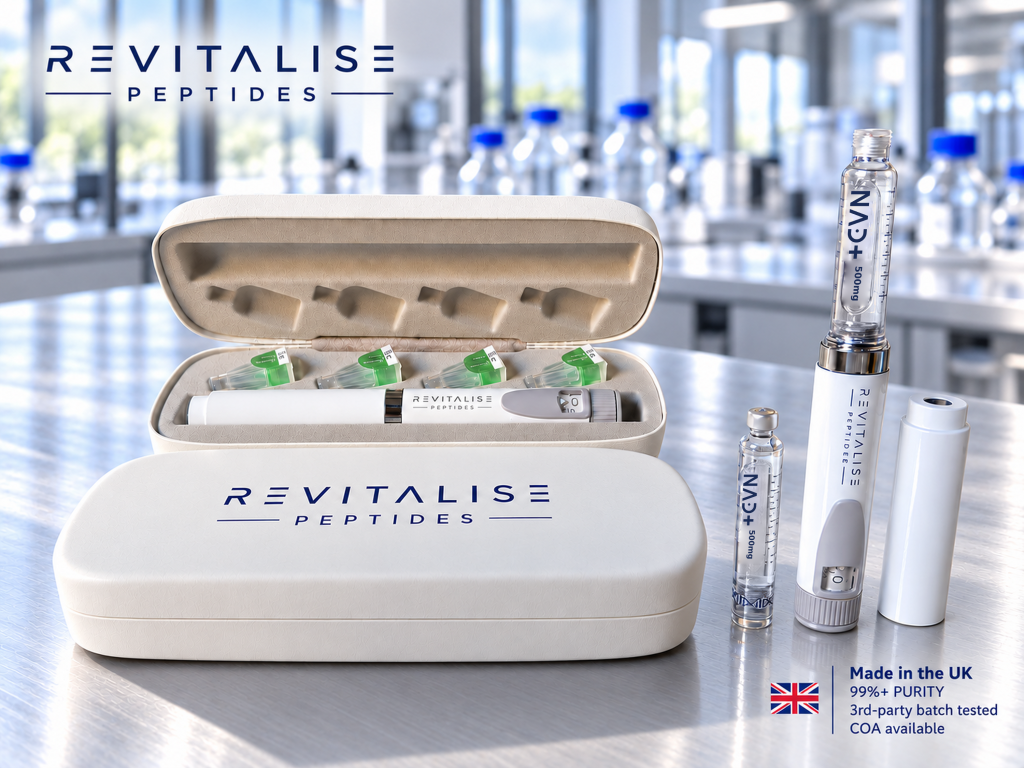
If a research vial looks almost empty, that can be surprising. In a lyophilised (freeze-dried) product, the dry material may occupy very little space and can appear as a small cake, flakes, powder or a thin film. The amount you can see is not a reliable way to judge what is in the vial.
Appearance varies with the formulation, presentation and freeze-drying process. A published review of lyophilised pharmaceutical products discusses how appearance can vary and why appearance alone is not always a product quality measure. That general research does not define what any particular Revitalise vial should look like; product and batch records are the right reference.
Why can a vial look nearly empty?
Dry material can be light, porous and spread over the base or wall of a vial. From some angles, a thin layer is easy to miss. The vial’s shape and lighting can also make a small amount look smaller than expected. Comparing one vial with a photo online is especially unreliable: images may use different lighting, angles or packaging.
What vial appearance can—and cannot—tell you
Appearance may help you notice an unexpected change, but it cannot confirm identity, purity, concentration, quantity, sterility or suitability for a research application. A white cake or powder is not proof of quality, and a vial that looks sparse is not, by itself, proof that it is underfilled.
If the appearance differs from the product-specific information you were given, or you have any concern about a vial, pause and contact the supplier with the product name and batch or lot number. Do not rely on a visual comparison to resolve a quality question.
Four checks for research buyers
- Match the label. Check the product name and labelled quantity against your order and records.
- Note the batch or lot. Keep the identifier with your research documentation so any supporting records relate to the same batch.
- Read the relevant certificate. Look for batch-specific results, the analytical method and the scope of the reported testing. A general quality statement is not a substitute for batch documentation.
- Use product-specific guidance. Follow the supplier’s information for that exact product and presentation. Ask the supplier if the expected appearance is unclear.
What about bacteriostatic mixing water?
Bacteriostatic mixing water is a separate liquid product, so it is not expected to have a dry powder or cake. Check its own label and product information rather than comparing its appearance with a lyophilised research vial. For product questions, contact the supplier; this article does not provide preparation or use instructions.
Frequently asked questions
Does a vial that looks almost empty mean it contains less?
No conclusion about quantity can be made from appearance alone. Use the label and applicable batch documentation, and contact the supplier if anything does not match.
Does a uniform-looking cake prove purity?
No. Visual appearance cannot establish purity or identity. Refer to relevant analytical documentation for the specific product and batch.
Should every vial look identical?
Do not assume that photos or another vial establish a universal visual standard. Presentation can vary; ask the supplier for product-specific expectations if you are unsure.
Look beyond the vial
A small-looking amount of dry material can be difficult to judge by eye. For research purchasing decisions, rely on clear labelling, batch-linked records and product-specific information—not appearance alone.
Browse research vials or review quality and certification information.
Products are offered for lawful laboratory, analytical and in-vitro research use only. Not for human or veterinary use.
Further reading: Patel et al., “Lyophilized Drug Product Cake Appearance: What Is Acceptable?” (2017). This review concerns lyophilised pharmaceutical products generally and is not a product-specific specification for Revitalise research vials. Read the abstract on PubMed.