Vials Versus Peptide Pens: Which Format Fits?
A vial is usually the better starting point when flexibility, compact storage and format-neutral procurement matter most. A peptide pen system is better suited to research workflows that benefit from a standardised, cartridge-based handling format. The practical question in vials versus peptide pens is not which format is universally superior, but which one matches the material, documentation and working process your research requires.
Both formats must remain within their stated research-only purpose. They are not medicines and are not supplied to diagnose, treat, cure or prevent disease. Format convenience does not establish suitability for human or veterinary use, nor does it replace product-specific documentation, restrictions or institutional procedures.
What separates a vial from a peptide pen?
An unconstituted peptide vial is a sealed container holding a stated quantity of research material, commonly in dry form. It is a broadly familiar laboratory format: straightforward to catalogue, easy to store alongside other materials and adaptable to different research plans where the relevant handling approach has already been defined.
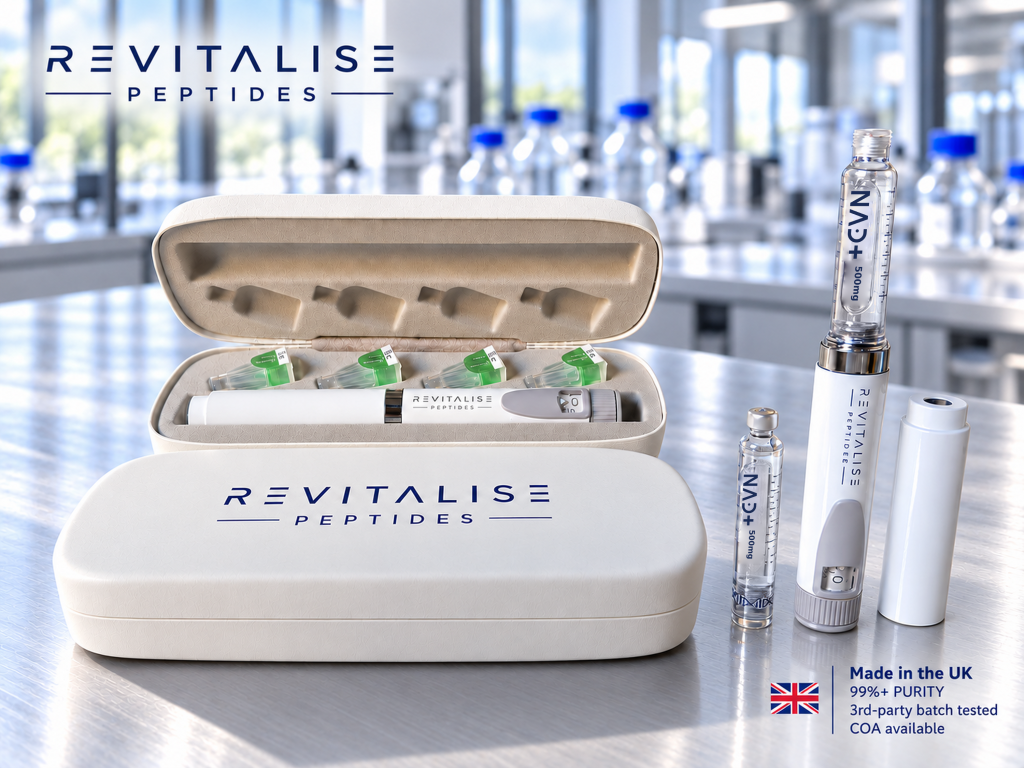
A reusable peptide pen system is a format ecosystem rather than simply a different container. It generally comprises a reusable pen body and compatible refill cartridge or cartridge stack. The cartridge is designed to work with that particular system, while the pen body provides the mechanical housing and format consistency. Compatibility is therefore central: a cartridge should not be assumed to fit a different pen system merely because it appears similar.
Neither format alters the identity of the compound. A vial and a cartridge containing the same stated material are still separate products with separate packaging, lot information and supporting records. Procurement decisions should begin with the product specification and batch documentation, then consider the format.
Vials versus peptide pens: a practical comparison
| Procurement consideration | Vials | Reusable pen and cartridge formats | |—|—|—| | Format flexibility | Broadly adaptable to varied laboratory workflows | Designed around a defined compatible system | | Initial equipment need | Usually limited to the materials appropriate to the established workflow | Requires a compatible reusable pen body and cartridge format | | Repeat ordering | Useful where quantities or compounds vary between projects | Convenient where the same compatible refill format is reordered | | Inventory organisation | Compact, individually labelled units | Separates reusable hardware from consumable cartridges | | Documentation checks | Review vial label, batch and product records | Review cartridge records plus pen and cartridge compatibility information | | Change control | Suitable where a research team needs format flexibility | Helpful where standardising a particular cartridge workflow is the priority |
The table is deliberately practical rather than clinical. It does not compare outcomes, administration or dosing. Those are outside the scope of research-material procurement and should not be inferred from the shape of a product.
When vials are the more sensible choice
Vials are often preferable during early-stage procurement, when a project is evaluating multiple research materials or when a laboratory needs to retain maximum flexibility over its own established handling methods. They can also make stock control simpler when each material is logged as an individual, sealed unit with its corresponding batch records.
This format may suit buyers purchasing across several research areas, such as metabolic signalling, cellular biology or tissue-pathway research, where compounds, quantities and project timelines differ. A vial-based purchase can keep the format decision separate from any investment in a reusable hardware system.
Vials also offer a clearer route when compatibility is uncertain. There is no pen body, cartridge geometry or refill configuration to verify. That does not make the wider documentation process less important. Researchers should still check the exact product name, stated content, lot or batch identifier where available, storage information supplied for that product and the relevant certificate of analysis.
A certificate of analysis should be read for what it actually reports. Identity confirmation, chromatographic purity and stated peptide content are related but distinct questions. HPLC can indicate the relative composition of a sample under the stated analytical conditions; mass spectrometry supports molecular-mass and identity assessment. Neither should be treated as a substitute for reviewing the full documentation package and its stated limits.
When a reusable pen system may fit the workflow
A reusable pen system can be a practical procurement choice where a research operation already works with the relevant cartridge format and wants to separate durable equipment from repeat consumable purchases. Rather than ordering a complete device each time, the buyer can retain the pen body and reorder compatible cartridges or cartridge stacks when needed.
This approach can support tidier stock organisation. Reusable hardware can be recorded as equipment, while sealed cartridges are tracked as research consumables. For small operations, that distinction may reduce confusion between current stock, replacement components and unopened material.
The trade-off is lower format flexibility. A pen system creates a dependency on the specified cartridge range, so compatibility information must be checked before procurement. It is sensible to confirm the precise pen model, cartridge type, product strength and documentation before placing a repeat order. Do not rely on photographs, generic descriptions or assumptions based on another supplier’s system.
The reusable format also calls for careful version control. If a manufacturer changes cartridge design, labelling or accompanying instructions, researchers should treat that as a relevant procurement change and retain the current documentation with their records.
Documentation matters more than the container
The most expensive mistake is often not choosing the wrong format. It is treating a familiar format as evidence that the material has been adequately assessed. Whether purchasing vials or cartridges, use a consistent documentation review process.
Start by matching the product label to the intended research material and stated amount. Then check the available batch-specific or product-specific records, including the test methods reported and the date or batch reference. If a supplier provides verification or certification information, assess what that evidence covers rather than extending it into claims it does not make.
For example, a report showing an HPLC result should not automatically be read as a full identity assessment. Likewise, a molecular-mass result does not by itself describe every impurity or establish the amount of material present. The appropriate level of evidence depends on the research question, the stage of work and the controls used within the laboratory.
Storage and stability require the same discipline. Follow the product-specific manufacturer information or supplied stability documentation. Avoid applying a temperature or shelf-life statement from one peptide, vial or cartridge to another, as formulation, packaging and available evidence may differ.
Cost, waste and ordering patterns
The lowest unit price is not always the lowest workflow cost. With vials, the key considerations are whether the pack size aligns with planned research use, how many distinct materials are being compared and whether purchasing several individual units creates excess stock. With a pen system, the calculation includes the initial reusable hardware and the likelihood of ordering compatible refills often enough for that investment to make sense.
For a one-off or exploratory purchase, a vial may offer the cleaner route. For a recurring research programme built around compatible cartridge products, a reusable system may reduce repeat equipment purchases and simplify ordering. That is an operational benefit, not a statement about material quality or research performance.
Bundles and cartridge stacks can be useful where they genuinely match an approved purchasing plan. They should not encourage over-ordering, particularly where storage capacity, project duration or documentation review has not been established.
A short decision process before ordering
First, decide whether the project needs a flexible container format or an established cartridge-based system. Next, verify the precise product, stated content and current documentation. Then confirm whether the planned workflow has a genuine reason to retain reusable pen hardware. Finally, record storage requirements, batch details and destination-specific shipping information before placing the order.
For many researchers, vials are the sensible default because they are format-flexible and simple to integrate into varied procurement plans. Peptide pens become more compelling when cartridge compatibility, repeat purchasing and standardised equipment tracking are already part of the workflow.
Review the current product documentation and compatibility information before selecting either format. A well-matched container supports orderly research procurement; it does not replace scientific controls, careful records or the research-only limits of the material.