
A peptide certificate of analysis should let you connect a physical vial to a documented batch, an analytical method and a reported result. That is the practical answer to how to read peptide coa documentation: first establish that the certificate belongs to the exact material in hand, then assess what each test measures - and what it does not.
For research procurement, a COA is not a marketing badge or a blanket statement of suitability. It is a batch-specific record. Its value depends on clear traceability, appropriate analytical methods and results presented alongside the relevant specification. A visually polished certificate with no batch number, method detail or laboratory identification provides far less assurance than a plain but traceable document.
Start with batch traceability
Read the administrative information before interpreting the analytical data. The product name should match the ordered research material, including the peptide sequence or recognised compound name where supplied. The batch or lot number on the COA must match the label on the vial, cartridge or other supplied format.
Also check the stated batch size or sample identifier, analysis date, certificate issue date and the name of the testing laboratory or quality function. These fields create an auditable chain between the tested sample and the material being evaluated. A COA issued long after testing is not automatically problematic, but the dates should make sense and should not obscure which batch was analysed.
Where a supplier makes batch documentation available, retain a copy alongside your own research records. If material is split into several working containers, record the original lot number rather than assigning an informal description that breaks the link to the certificate.
Confirm the peptide identity
Identity asks a basic but essential question: does the tested material have the expected molecular identity? For peptides, mass spectrometry is commonly used because it measures the mass-to-charge ratio of ions and can indicate whether the observed molecular mass is consistent with the expected peptide.
A COA may show a calculated molecular weight and an observed mass. Small differences can arise from the ion form reported, such as a protonated or multiply charged ion, and from the way the instrument output is presented. The key point is not that every number looks identical at a glance, but that the certificate explains the result clearly enough to show agreement with the expected analyte.
Mass spectrometry is highly informative, but it is not a complete purity measurement. Two species may have similar or even identical nominal masses while differing in sequence arrangement or chemical structure. For that reason, identity assessment is often considered alongside chromatographic analysis rather than in isolation.
What a molecular-weight result can tell you
| COA field | What it supports | What it does not prove on its own |
|---|---|---|
| Expected molecular weight | The identity target used for comparison | That the vial contains only that peptide |
| Observed mass or mass spectrum | Consistency with the expected peptide mass | Overall chemical purity or peptide quantity |
| Ion notation, such as [M+H]+ | How the detected ion was reported | A different molecular structure cannot be present |
For complex, modified or blended research materials, interpretation may require more than a single mass value. The COA should identify the material tested with enough precision to avoid confusing related compounds, salts, ester forms or blends.
Read HPLC purity as a chromatographic result
High-performance liquid chromatography, usually abbreviated to HPLC, separates components in a sample as they pass through a column. The resulting chromatogram contains peaks at different retention times. A reported purity percentage is often calculated from the relative area of the principal peak compared with other detected peaks under the stated method.
This is useful because it shows how much of the detector response is associated with the main chromatographic component. It does not, by itself, mean that the material contains that same percentage by weight of the labelled peptide. Nor does it establish sterility, biological activity, absence of every possible contaminant or suitability for any particular experimental system.
The distinction matters. HPLC purity is a measure of chromatographic composition under specified conditions. Peptide content is a quantitative question: how much peptide is actually present in the vial or sample. A COA may include an assay or content result, but this is separate from a purity result and should be labelled as such.
When reviewing an HPLC section, look for the reported purity, method reference, detection wavelength where relevant, retention time and a chromatogram or summary that identifies the main peak. A peak area percentage without a method, sample identification or acceptance criterion is harder to assess meaningfully.
Purity, content and identity are different questions
| Question | Typical evidence | Practical interpretation |
|---|---|---|
| Is this the expected peptide? | Mass spectrometry, sequence-specific analysis | Supports identity when results agree with the stated material |
| How chromatographically homogeneous is it? | HPLC or UPLC purity result | Describes the main detected component relative to detected impurities |
| How much peptide is present? | Assay or quantitative content method | Addresses quantity, if the method and units are stated |
Do not infer a vial’s exact peptide quantity from an HPLC purity percentage. A material can show high chromatographic purity while its measured content differs from a nominal fill claim for reasons that require a separate quantitative assessment.
Check the method and specification, not only the headline number
A result has limited meaning without a defined method and acceptance criterion. Good COA documentation normally states a specification, such as a minimum purity threshold or an expected mass range, then records the batch result against it. The method may be named directly, referenced by an internal method number or accompanied by sufficient technical detail to identify the technique used.
Method suitability matters because the result depends on the sample preparation, column chemistry, mobile phase, detector and calculation approach. Analytical validation principles, including accuracy, precision, specificity and range, are set out in ICH Q2(R2). A supplier does not need to reproduce a full validation package on every COA, but a credible certificate should not present results as method-free facts.
For a research buyer, the appropriate level of detail depends on the project. Early-stage educational work may only require clear identity and purity evidence. Work requiring comparisons across batches, analytical development or formal record keeping may justify requesting fuller chromatograms, method summaries or additional batch documentation.
Know what a standard peptide COA does not cover
A COA has boundaries. Unless explicitly tested and reported, do not assume it confirms sterility, endotoxin level, residual solvents, microbial limits, elemental impurities, water content, counter-ion composition or stability over time. These are distinct analytical questions and require their own methods and specifications.
Likewise, a COA cannot establish clinical performance, therapeutic benefit or suitability for personal use. Research peptides are supplied for laboratory and non-clinical research purposes, not as medicines. Laboratory, animal and human evidence are different evidential categories; analytical documentation does not bridge those categories.
Storage and handling should follow the product-specific manufacturer or batch documentation. It is not appropriate to apply a universal storage temperature or shelf-life assumption simply because two products are both peptides.
Common warning signs when reviewing a COA
A missing lot number is the clearest warning sign because it prevents direct matching to the supplied material. Other concerns include a generic certificate reused across products, an unexplained purity figure with no technique named, inconsistent compound names, implausible dates, absent laboratory details or a chromatogram that does not identify the tested sample.
These signs do not always prove that material is unsuitable. They do indicate that the documentation is insufficient for confident traceability, and that further clarification is sensible before relying on the result in a research record. Equally, a COA should be read proportionately: more pages do not automatically mean better analytical control if the core fields remain unclear.
Build COA review into your procurement record
A short, repeatable review process is usually enough. Match the product and lot number, verify the identity method, separate HPLC purity from peptide content, read the specification beside the result, and note any tests that were not performed. This creates a more reliable basis for comparing batches and suppliers than focusing on a single percentage.
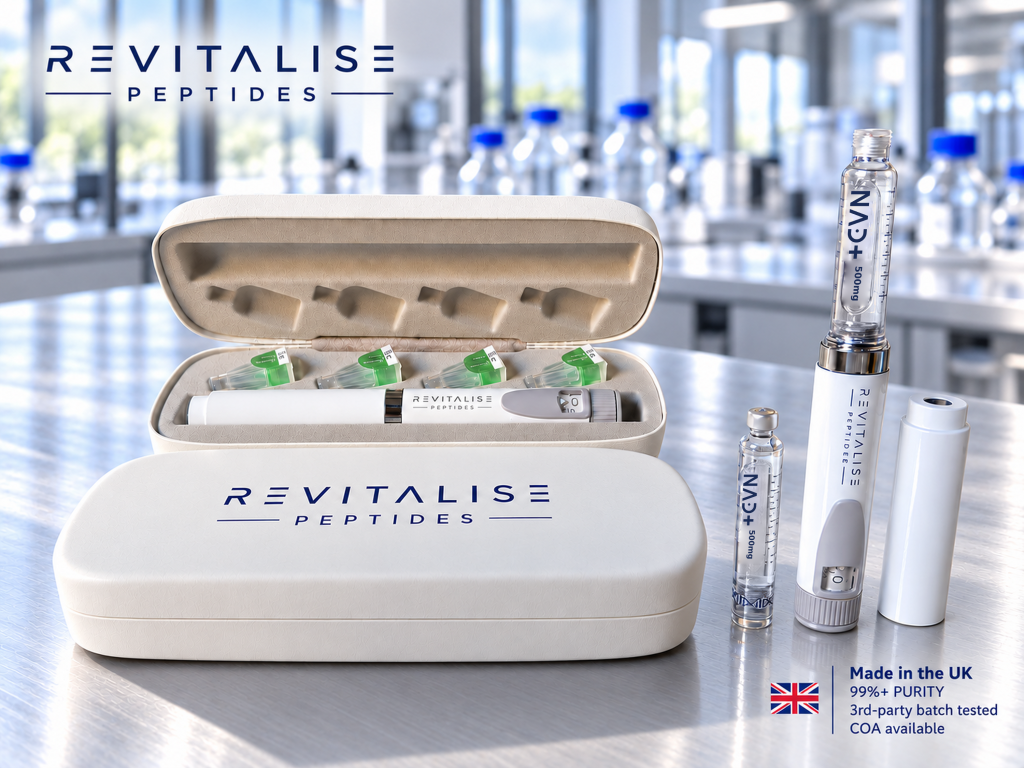
For Revitalise Peptides research materials, review the documentation associated with the specific product and batch rather than relying on general claims about a compound category. Where further analytical detail is needed for a defined project, record the question precisely: identity, chromatographic purity, content, or another attribute. Clear questions produce documentation that is easier to assess and research records that remain useful long after the vial label has been discarded.