What Is Peptide Reconstitution in Research?
A vial containing a dry peptide may look straightforward, but its usefulness in a research workflow depends on what happens next. What is peptide reconstitution? In laboratory terms, it is the controlled addition of a suitable solvent to a dry peptide preparation to produce a solution of known, recorded concentration for research use.
Reconstitution is not simply a matter of making a vial look clear. The solvent, peptide sequence, intended analytical method, final concentration and handling record can all affect whether the resulting material is suitable for the experiment at hand. For research-only materials, this is a laboratory preparation process, not a direction for human or veterinary administration.
What peptide reconstitution means
Many research peptides are supplied as dry solids, commonly following lyophilisation. Removing water can make a material more practical to transport and store, but it does not remove the need for careful solution preparation. Once solvent is introduced, the researcher is working with a new format that may have different stability, handling and analytical considerations from the dry material.
Reconstitution has two parts. First, a compatible solvent is selected and added to the peptide. Second, the final solution is documented so that the peptide amount, solvent volume and resulting concentration can be traced back to the original vial and its accompanying records.
The underlying calculation is simple: concentration equals the amount of peptide divided by the final solution volume. In practice, however, confidence in that figure depends on knowing what the vial label represents, whether the listed mass refers to peptide content or total material, and whether the preparation is fully dissolved and appropriate for the planned research method.
Reconstitution, dissolution and dilution are different steps
These terms are sometimes used interchangeably, but they describe different actions. Reconstitution is the initial conversion of a dry material into a solution. Dissolution describes the physical process by which the solid enters solution. Dilution occurs later, when a prepared solution is brought to a lower concentration using a compatible medium.
Keeping those distinctions in a notebook or electronic record helps prevent a common source of confusion: treating a later diluted working solution as though it were the original reconstituted stock. Each format should have its own concentration, date, solvent identity and sample identifier.
Why peptides do not all behave alike in solution
A peptide’s behaviour in solution is shaped by its amino-acid sequence and the chemistry of the solvent system. Charge, hydrophobicity, length, aggregation tendency and modifications can influence how readily a peptide dissolves and remains suitable for the intended assay.
A highly water-compatible sequence may behave differently from a hydrophobic peptide or one containing oxidation-sensitive residues. Some preparations can appear visually clear while still being unsuitable for a particular analytical purpose. Conversely, slow dissolution does not automatically indicate poor quality. It may reflect the interaction between a specific peptide and a chosen solvent, concentration or temperature.
For that reason, there is no scientifically defensible universal solvent, concentration or holding time for all peptides. Product-specific documentation, the experimental method and the researcher’s own validated laboratory procedures should govern preparation decisions.
Solvent selection is a method decision
The selected solvent should be compatible with both the peptide and the downstream research method. A solvent that assists initial dissolution may interfere with a cell-based assay, chromatography method or other analytical readout. Buffer composition, pH, ionic strength and the presence of co-solvents can all change peptide behaviour.
This is also why the phrase “reconstituted with water” is not enough for a complete record. A useful entry identifies the solvent or buffer, its relevant specification, the volume used, the preparation date and the person or system responsible for the preparation. Where an experiment has a formal protocol, the preparation should follow that protocol rather than a generic online convention.
What to check before preparing a research solution
The vial label and its associated documentation should be reviewed before any preparation begins. Confirm the compound name, stated quantity, batch or lot identifier, intended research format and any supplier-provided handling notes. If a certificate of analysis is available, read it in context rather than treating one figure as a complete verdict on suitability.
A certificate can address specific tested attributes, but different methods answer different questions. HPLC is commonly used to assess chromatographic purity, meaning the proportion of signal attributed to the principal peak under stated test conditions. Mass spectrometry supports identity assessment by measuring molecular mass. Neither result alone necessarily establishes the exact amount of peptide present in a vial, the suitability of a particular solvent, or the stability of a solution after preparation.
This distinction matters when calculating concentration. Purity, identity and content are related quality questions, but they are not interchangeable. Researchers should avoid assuming that a purity result is automatically a content measurement, or that a labelled vial quantity replaces the need for method-appropriate verification.
| Record element | Why it matters | | — | — | | Compound name and batch identifier | Connects the solution to the supplied material and documentation. | | Stated vial quantity | Provides the starting point for a nominal concentration calculation. | | Solvent and final volume | Defines the solution format and concentration. | | Date and preparer | Supports traceability across experiments and handovers. | | Appearance and observations | Captures unexpected residue, cloudiness or other deviations for review. | | Planned use | Helps assess whether the solvent system suits the analytical method. |
A controlled laboratory workflow
Good peptide reconstitution is less about memorising a single technique and more about controlling variables. Use suitable laboratory equipment, work within the relevant cleanliness and safety procedures, and ensure the material has been correctly identified before it is opened. The preparation should be labelled immediately after it is made, not later from memory.
The aim is to avoid preventable ambiguity. If the final volume is uncertain, if the solvent source is unclear, or if a vial has been confused with another batch, the calculated concentration may no longer be reliable. In a small research setting, these errors can be easy to overlook because the solution may still appear normal.
Careful handling also limits avoidable material loss. Peptides can adsorb to surfaces, form aggregates or be affected by repeated handling, depending on the compound and conditions. These are method-development questions rather than assumptions to be applied equally to every peptide. Where quantitative work is critical, researchers may need suitable controls and method-specific checks rather than relying solely on visual appearance.
Common errors that compromise traceability
The most consequential mistakes are often administrative rather than dramatic. A solution made from an unlabelled vial, a missing solvent volume, or a copied concentration with no source calculation can make later results difficult to interpret.
Another frequent issue is treating supplier documentation as a substitute for in-house experimental controls. A batch document can support procurement and identity review, but it cannot validate every possible solvent system, assay matrix or storage condition used after receipt. That validation belongs within the relevant research method.
It is equally unhelpful to apply a universal storage rule to every reconstituted peptide. Solution stability depends on the individual material, solvent system, concentration, container and intended use. Follow product-specific manufacturer information where supplied, and retain a clear record of any laboratory-defined conditions.
Reconstitution records support better procurement decisions
For repeat research work, preparation records can reveal whether a chosen format is practical. A laboratory may find that individual vials, bundled research vials, cartridges or another format better fits its sample tracking and planned workflow. The appropriate choice depends on the compound, batch management needs, assay design and the laboratory’s established procedures.
When comparing suppliers, look beyond a headline purity figure. Relevant questions include whether batch identification is clear, whether documentation can be matched to the product received, what analytical methods are described, and whether product format details are sufficiently specific for research planning. These checks are particularly valuable where several related peptides, blends or refill formats are being organised at once.
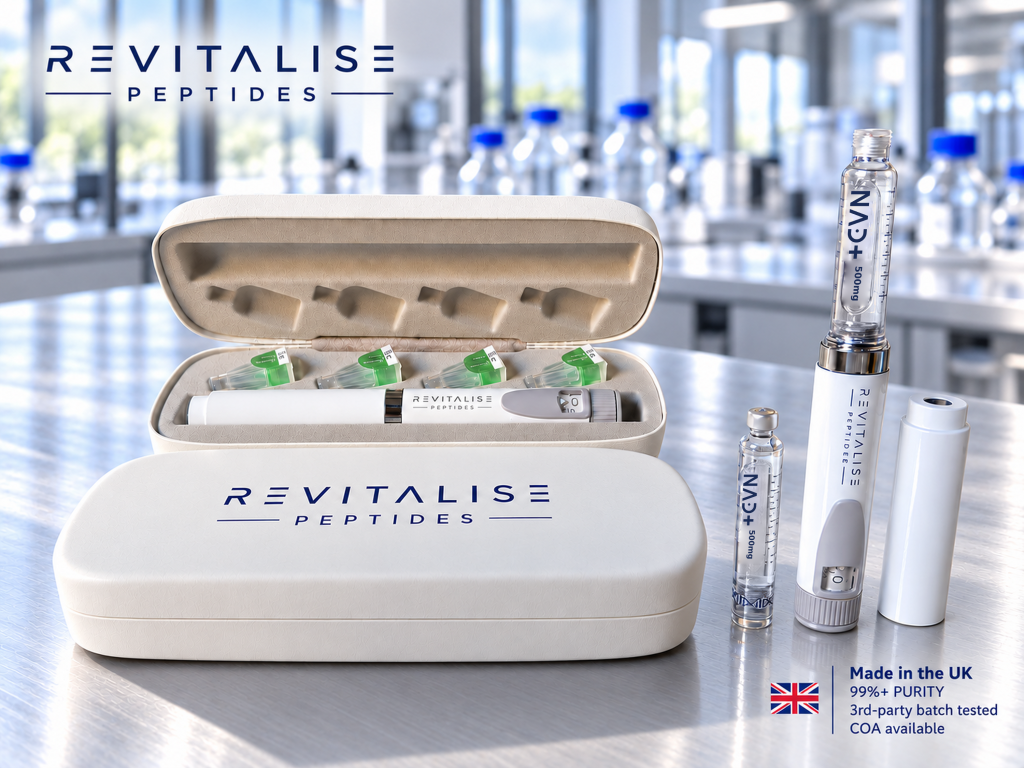
Revitalise Peptides presents its materials for laboratory research use only. Researchers should review the documentation associated with the specific product and batch, and ensure that procurement, preparation and disposal follow their own institutional, legal and laboratory requirements.
A well-prepared peptide solution starts with a simple question: can another researcher understand exactly what was prepared, from which vial, in what solvent and for which experiment? If the answer is yes, the work is far easier to reproduce, investigate and build upon.