Research Peptide Compliance Guide for UK Buyers
Procurement is the point at which peptide compliance is either made manageable or made needlessly difficult. Before a vial, cartridge or consumable enters a research workflow, the buyer should be able to explain what it is, what documentation supports its identity and quality, how it will be used, and why that intended use is permitted. This research peptide compliance guide sets out a practical framework for UK buyers sourcing materials for laboratory, educational, cosmetic or other non-clinical research.
The central rule is straightforward: a research-only label is not a substitute for due diligence. It does not override applicable restrictions, turn a material into a medicine, or establish suitability for human or veterinary use. Compliance depends on the compound, presentation, claims, customer type, destination and planned activity.
Start with the intended use, not the catalogue category
A peptide may be discussed in published work relating to metabolism, signalling, tissue models or cellular pathways. That scientific context does not determine how a supplied material may be purchased, handled or represented. The relevant question is narrower: what is the material being acquired for in this specific workflow?
Write the intended use in plain, non-promotional language before ordering. For example, “analytical method development”, “in-vitro receptor-binding work”, “educational demonstration” or “non-clinical formulation compatibility assessment” gives a procurement record a clearer basis than a vague reference to “research”. Avoid language implying diagnosis, prevention, treatment or enhancement in people or animals.
This distinction also protects the integrity of research communication. Cell-based and animal findings can be useful for forming mechanistic questions, but they do not establish clinical outcomes. A compound’s presence in the scientific literature is not evidence that a particular research material is authorised, safe or effective for personal use.
Apply a proportionate compliance screen
Not every purchase carries the same level of risk. A small order of a familiar analytical reference material for an established laboratory may require a different review from a novel peptide, a multi-item blend, or an order intended for export. The right approach is proportionate, documented and repeatable.
Confirm the product identity
Record the product name, stated sequence or active material where supplied, nominal quantity, format, batch or lot number and date of purchase. For blends, do not assume that a single headline name answers every identity question. The component list, stated ratio and analytical scope matter.
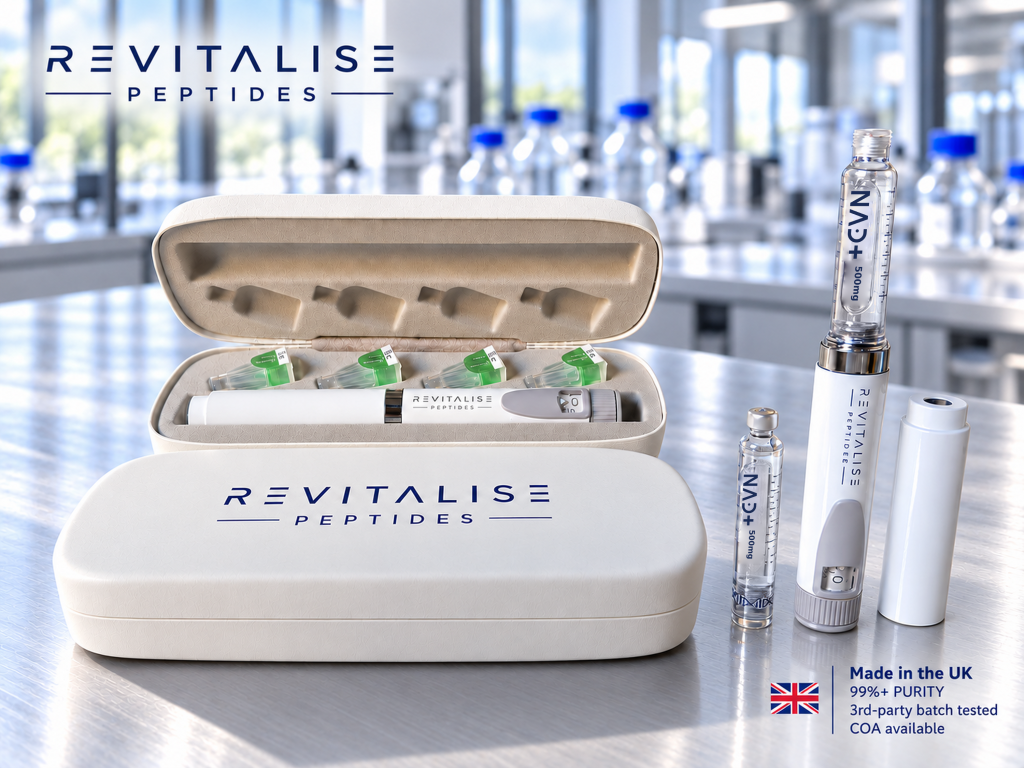
A reusable pen, refill cartridge or other specialist format requires an additional check. The format may support organised laboratory workflows, but it does not alter the research-only status of the material or create a basis for medical use. Procurement notes should distinguish the peptide material itself from accessories and consumables used to handle it.
Check the claim boundary
Supplier descriptions should remain consistent with laboratory research. Be cautious where product presentation, marketing language or downstream use appears to cross into medicinal, therapeutic, veterinary or consumer-health claims. The UK Human Medicines Regulations 2012 are particularly relevant where a product is presented as treating or preventing disease, or where its function and presentation could bring it within medicines controls.
This is an area where facts matter more than labels. A product marked “not for human consumption” may still raise compliance questions if surrounding claims, instructions or intended use point elsewhere. If the intended activity is unclear, pause procurement and obtain competent regulatory or institutional advice.
Consider destination and organisation requirements
For UK-based work, retain evidence of the receiving organisation or researcher, the delivery address and the stated research purpose where appropriate. For overseas orders, check the destination’s import rules before purchase. Customs, controlled-substance, medicines, chemical and laboratory-material requirements differ by jurisdiction, and a supplier’s ability to dispatch does not guarantee that an item can be lawfully imported or used at its destination.
Review current shipping policies for destination availability, charges and delivery timeframes rather than making assumptions about international delivery.
Documentation: ask what each document actually proves
A certificate of analysis, or COA, is valuable only when it is read in context. It should be attributable to the material supplied, ideally through a matching batch or lot reference. It may report one or more analytical results, but it is not a universal statement that every possible quality attribute has been assessed.
Three concepts are often blurred together:
- Identity asks whether the detected material is consistent with the expected peptide or molecular species.
- Purity describes the proportion of a measured chromatographic signal or material meeting a defined analytical criterion.
- Content concerns how much analyte is present in a vial or format, which is a separate question from chromatographic purity.
- Sterility or endotoxin status requires its own evidence and should never be inferred from an identity or purity result.
High-performance liquid chromatography, commonly shortened to HPLC, is typically used to separate components and assess a chromatographic purity profile. Mass spectrometry examines mass-to-charge information and can support molecular identity. Neither technique automatically answers every quality question, and a result from one method should not be described as evidence from the other.
Check the analytical method, reported result, acceptance basis where provided, sample or batch reference, test date and issuing laboratory details. If a document is generic, lacks a batch identifier, or does not clearly relate to the item under consideration, treat it as background information rather than batch-specific verification. The same principle applies to claims of independent testing: review the current product or batch documentation rather than assuming a statement applies across a whole range.
For readers needing a more detailed framework, Revitalise Peptides provides guidance on how to read a peptide COA. The useful habit is to ask a precise question of each document: identity, purity, content, contaminant testing or another defined attribute. Do not ask one certificate to answer them all.
Build a traceable research record
Good compliance is operational. A lightweight record can be sufficient for many small research settings, provided it can be retrieved and understood later. Keep the purchase confirmation, product page capture where relevant, batch-linked documentation, delivery record, intended-use statement and internal receiving log together.
At receipt, confirm that the outer packaging and product label match the order and documentation. Record any discrepancy before the material is entered into stock. If a vial is relabelled for an internal workflow, retain the original batch reference and avoid replacing the supplier’s identity information with an informal nickname alone.
A practical log should also identify who received the material, where it is held, and which project or study it supports. This is not administrative theatre. It reduces the risk of mixing batches, relying on the wrong certificate, or being unable to account for material during an internal review.
Storage and handling claims need evidence too
Peptides can be sensitive to moisture, temperature, light, oxidation and repeated handling, but there is no universal storage instruction that applies to every sequence, formulation or format. Use the manufacturer’s product-specific label, accompanying documentation and validated stability information where available. Do not invent a shelf life or storage temperature because it is common practice for a different material.
Record receipt condition and follow the supplied handling guidance. If your workflow involves preparing solutions or aliquots for research, the new material state may have different stability considerations from the original unopened product. That is a method-control question for the responsible researcher, not a basis for extrapolating therapeutic suitability.
Know when not to proceed
The strongest compliance decision is sometimes a deferred order. Stop and investigate when the planned use is not clearly non-clinical; the documentation cannot be connected to the supplied batch; the supplier makes unsupported disease or performance claims; the destination rules are uncertain; or the material’s regulatory position may be affected by its presentation or intended use.
Escalation does not need to be dramatic. It may mean requesting clarification, selecting a better-documented format, involving a laboratory manager, or seeking formal regulatory advice. What matters is that the decision is made before the material enters the workflow.
A well-run peptide procurement process does not rely on a disclaimer alone. It connects a defined research purpose with accurate product identity, batch-relevant evidence, careful records and honest scientific language. Before placing the next order, review the available documentation and choose the research format that can be properly accounted for from receipt through to project close.