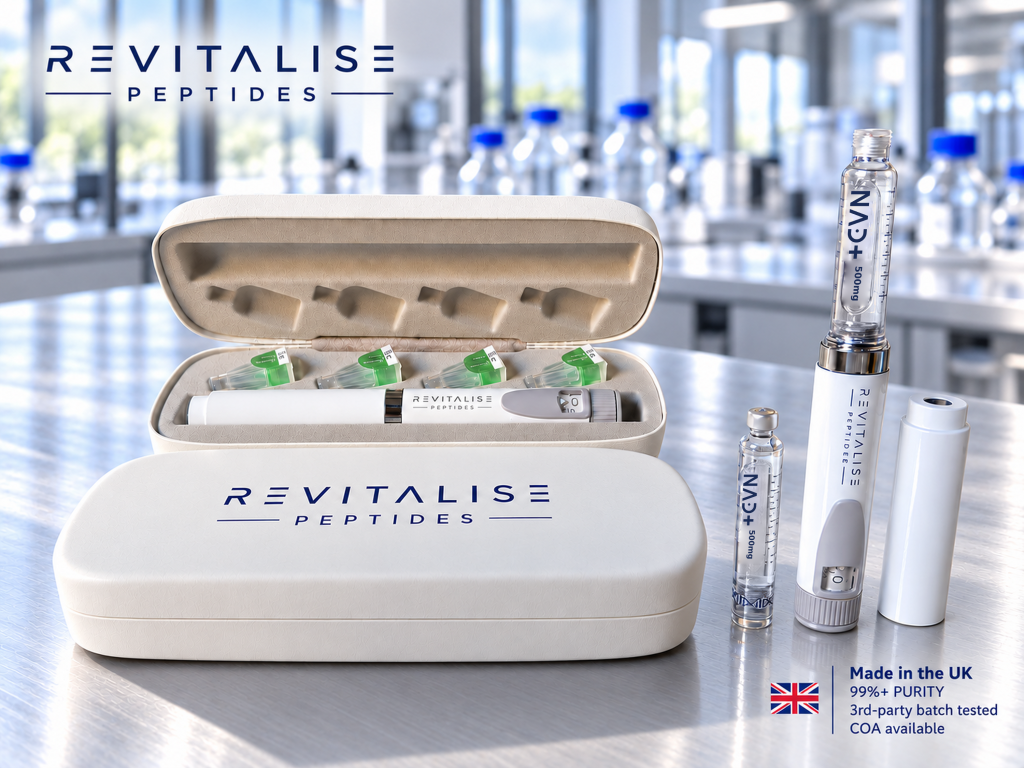

A vial of bacteriostatic water can look like a minor consumable beside a research peptide or other lyophilised material. In practice, it is part of the experimental system. Poor handling can introduce contamination, create uncertainty around sample history or alter the conditions under which a material is assessed. This bacteriostatic water handling guide focuses on controlled laboratory use: maintaining aseptic technique, preserving traceability and following the documentation supplied for the specific product.
Bacteriostatic water is not interchangeable with every aqueous laboratory diluent. Before opening a vial, confirm the intended research use, the formulation on the label and the compatibility information provided by the manufacturer of both the water and the material being studied. Research-use status does not remove the need to follow local laboratory rules, product restrictions or disposal procedures.
What bacteriostatic water is - and is not
Bacteriostatic water is sterile water formulated with a bacteriostatic preservative, commonly benzyl alcohol. A bacteriostatic agent is designed to inhibit bacterial growth under defined conditions; it does not make a repeatedly accessed vial permanently sterile, nor does it correct poor aseptic practice.
That distinction matters. The preservative can affect experimental design, analytical interpretation and material compatibility. A peptide, protein, cell-based assay or analytical method may require a different diluent, such as sterile water without preservative, a buffered solution or a manufacturer-specified solvent. “Water” on its own is not an adequate compatibility decision.
Treat the label and accompanying documentation as the controlling source for composition, storage conditions, handling limits and expiry. Do not apply a universal post-opening period or storage temperature from another product, even where the packaging appears similar.
Before opening: establish control of the vial
Good handling begins before the closure is accessed. Inspect the outer packaging and vial for damage, compromised seals, unexpected particulates, discolouration or an unclear label. If anything appears unusual, quarantine the item rather than trying to assess suitability by appearance alone. Visual inspection can identify obvious issues, but cannot verify sterility, identity or chemical composition.
Record the product name, batch or lot identifier, date received and stated expiry in the laboratory inventory. Where the supplier provides a certificate, specification, safety documentation or verification record, retain it against the same inventory entry. This makes it possible to trace the diluent used in a particular preparation if a later result is questioned.
For smaller research set-ups, a simple controlled worksheet is often sufficient. It should identify the vial, the person handling it, the date first accessed, the material prepared and the storage location. The purpose is not administrative theatre. It is to prevent an unlabeled vial from becoming an unknown variable.
Bacteriostatic water handling guide: aseptic access
Aseptic technique means reducing the chance that microorganisms, fibres, residues or other unwanted material enter the vial or preparation. The exact controls depend on the laboratory environment and risk assessment, but the basic discipline is consistent.
Prepare a clean, uncluttered work area and use suitable personal protective equipment for the materials involved. Check that all consumables are appropriate for laboratory use and within their stated expiry. Avoid placing closures, caps or sterile contact surfaces directly on the bench. Before access, clean the vial stopper using the laboratory’s validated cleaning procedure and allow the surface to dry fully. Wet disinfectant is not the same as effective surface preparation.
Use a new sterile access device for each entry. Do not reuse a device between vials, between different materials or after it has contacted a non-sterile surface. Minimise the time that containers are open, avoid touching critical surfaces and recap promptly. These measures reduce risk, but do not justify handling beyond the conditions stated by the product manufacturer.
Where a preparation requires transfer into another container, select a clean, compatible vessel and label it immediately. Delayed labelling is a common and avoidable source of mix-ups, particularly when several clear solutions are being prepared in the same session.
Compatibility comes before convenience
Bacteriostatic water may be suitable for a defined material only where the relevant documentation supports that choice. Preservatives can be unsuitable in some assays and may interfere with sensitive analytical systems or biological models. The final concentration, pH, ionic strength, adsorption to surfaces and freeze-thaw history can also influence study results.
This is especially relevant for lyophilised research materials. Reconstitution changes the material from a dry, comparatively stable format into a solution whose handling requirements may differ substantially. The source material’s technical documentation should take priority over general online advice.
If compatibility is not stated, do not infer it from another peptide, another supplier’s format or an informal research discussion. Escalate the question to the material manufacturer, method owner or laboratory lead. In a formal research environment, document the rationale for the selected diluent in the study record.
| Question | Why it matters | Appropriate source for the answer |
|---|---|---|
| Does the material permit bacteriostatic water? | Preservatives and solution conditions may affect the study material or assay. | Manufacturer instructions or validated method |
| Is the vial intended for repeated access? | Container design and stated handling limits vary by product. | Product label and technical documentation |
| What storage conditions apply after opening or preparation? | Stability cannot be assumed from the unopened vial. | Product-specific stability information |
| Is the preservative acceptable for the model or assay? | It may become a confounding variable. | Assay protocol, method validation or study lead |
Labelling and documentation after preparation
A prepared solution should be identifiable without relying on memory. At minimum, label the container with the material name, diluent identity, preparation date, batch or lot reference where practical, preparer initials and any storage condition required by the relevant documentation. Laboratories with established quality systems may require additional fields such as concentration, project number or a preparation expiry.
Keep the distinction between product expiry and preparation-use limit clear. The printed expiry relates to the unopened product under its stated storage conditions. It does not automatically define how long a prepared research solution remains suitable. Likewise, a preservative should not be treated as a substitute for a documented stability assessment.
For studies where reproducibility matters, record enough detail to reconstruct the preparation later: the source vial, diluent batch, equipment used, date and any deviations from the written method. This is particularly valuable when comparing analytical outputs across sessions or operators.
Storage: follow the specific product, not a rule of thumb
Storage guidance should come from the vial label, safety data and manufacturer documentation. Avoid broad claims such as “refrigerate all bacteriostatic water” or “keep all prepared materials frozen”. Temperature, light exposure, container orientation and permitted handling time depend on the formulation and the material prepared with it.
Keep stock and prepared materials separated where possible, with clear location control. Limit unnecessary temperature cycling and protect labels from moisture or abrasion. If a vial has been stored outside its specified conditions, has an uncertain access history or cannot be positively identified, treat it as non-conforming and follow the laboratory’s deviation and disposal process.
Know when to discard or quarantine
Discarding a questionable consumable is usually less costly than defending uncertain data. Quarantine is appropriate when a vial is damaged, the seal appears compromised, the solution shows unexpected visible change, the label is incomplete, storage history is unknown or the product is beyond the manufacturer’s stated expiry. It is also appropriate when aseptic controls were not followed or when an incorrect diluent may have been used.
Do not attempt to recover a suspect vial by filtering, relabelling or combining it with a fresh container unless a validated laboratory procedure explicitly allows that action. Such steps can conceal the original deviation rather than resolve it.
Dispose of vials, access devices and any prepared materials under the site’s waste procedures, taking account of the preservative, the research material and local requirements. Sharps must enter an approved sharps route, not general waste.
A proportionate approach for independent research settings
Not every research workspace has a formal quality-management system, but every workspace benefits from a few non-negotiable controls: verify the label, use clean technique, avoid unsupported compatibility assumptions and maintain a usable record. These habits scale well from exploratory bench work to structured preclinical projects.
For consumables sourced alongside research materials, documentation should be reviewed as carefully as the documentation for the primary compound. Revitalise Peptides supplies materials for laboratory research only, not for diagnosis, treatment, cure or prevention of disease. Before beginning a preparation, review the current product label and associated documentation, then align the handling plan with the requirements of the specific research method.